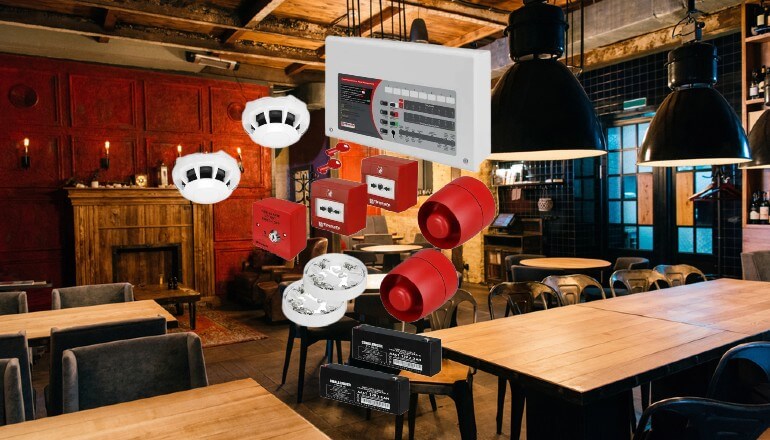
In Leeds — with its mix of modern offices, heritage buildings, industrial units, retail centres and hospitality venues — fire safety demands more than simply fitting a few detectors.
Yet many commercial premises still rely on fire alarm systems that fall short of legal and operational requirements.
Below are the most common mistakes Leeds businesses make, why they matter and how they can be avoided with a properly designed, installed and maintained commercial fire alarm system.
❌ Mistake 1: Assuming an Old System Is Still Compliant
Fire alarms age. Panels become obsolete, detectors lose sensitivity and system programming no longer reflects current building layouts.
Why it’s a problem:
- Delayed or unreliable detection
- Higher false alarm rates
- Lack of supporting documentation
- Failed audits or insurance issues
How to avoid it:
Schedule a system review every few years, especially after building changes.
❌ Mistake 2: Installing Identical Detectors Everywhere
Copy-and-paste detector choices lead to false alarms or missed fires.
Why it’s a problem:
Different areas require specific devices — smoke, heat, multi-sensor, aspirating or beam detection.
How to avoid it:
Match detector type to the environment, ignition sources and airflow patterns.
❌ Mistake 3: Poor Sounder Coverage and Low Audibility
Some parts of large Leeds buildings have sounders that are too quiet or completely absent.
Why it’s a problem:
People cannot evacuate quickly if they cannot hear the alarm.
How to avoid it:
A sound level survey during commissioning ensures consistent audibility throughout the premises.
❌ Mistake 4: Ignoring the Fire Risk Assessment
Many systems no longer match the FRA’s findings.
Why it’s a problem:
Your FRA determines your alarm category and coverage needs.
How to avoid it:
Ensure your system and FRA remain aligned — especially after layout changes or occupancy shifts.
❌ Mistake 5: Failing to Record Weekly Tests
It’s one of the simplest requirements, yet one of the most overlooked.
Why it’s a problem:
A missing or incomplete logbook is a red flag in any audit.
It also hides early signs of failure.
How to avoid it:
Test one manual call point every week and record it clearly.
❌ Mistake 6: Delaying Repairs After a Fault Appears
A single unresolved panel fault can compromise the whole system.
Why it’s a problem:
Faults disable parts of the system and may invalidate insurance cover.
How to avoid it:
Call a competent engineer immediately when a panel shows a warning.
❌ Mistake 7: Treating Fire Alarms as a “Fit and Forget” System
Commercial fire alarms require continual oversight.
Why it’s a problem:
Detectors degrade, batteries weaken and building usage evolves.
How to avoid it:
Follow a servicing schedule that includes periodic inspections and annual maintenance.
❌ Mistake 8: Not Updating the System After Refurbishment
In Leeds, many businesses reconfigure interiors, move workspaces or add extensions but never revise their fire alarm design.
Why it’s a problem:
Detector coverage becomes inaccurate, causing blind spots.
How to avoid it:
Any significant layout change should trigger a system review.
❌ Mistake 9: Relying on Non-Specialists for Fire Alarm Work
Electrical contractors often fit basic alarms — but cannot certify or commission them to the required standards.
Why it’s a problem:
Life-safety systems must comply with strict regulations.
How to avoid it:
Always use a specialist fire alarm provider for design, installation and servicing.
The Outcome of Avoiding These Mistakes
When Leeds businesses follow correct fire alarm practices, they benefit from:
- Faster detection
- Safer evacuations
- Fewer false alarms
- Stronger compliance records
- Reduced downtime and disruption
- Increased confidence for staff and visitors
A commercial fire alarm isn’t just equipment — it’s a safety commitment that must be managed proactively.