Fire Alarm Monitoring –
For many businesses in Leeds, installing a fire alarm system is seen as the final step in protecting a commercial premises. However, a fire alarm can only provide effective protection if someone responds quickly when it activates. This is why monitored fire alarm systems are becoming increasingly important for commercial buildings.
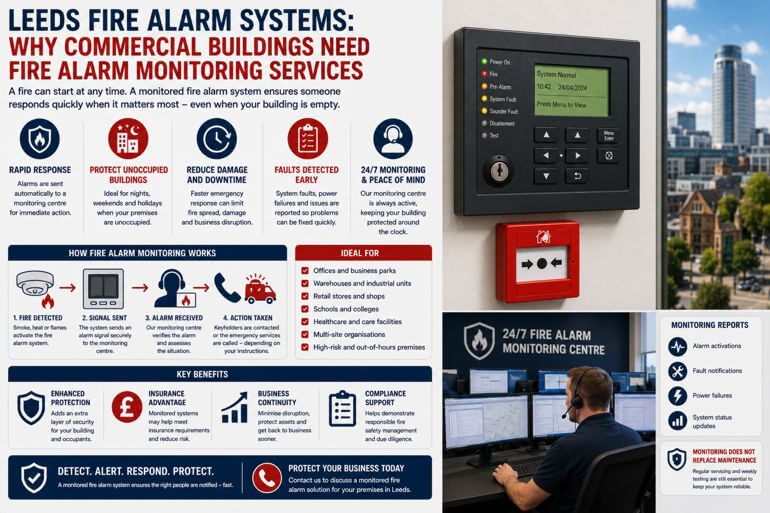
A monitored fire alarm system ensures that alarm activations are automatically transmitted to a monitoring centre, allowing rapid action even when the building is unoccupied.
What Is Fire Alarm Monitoring?
A monitored fire alarm system communicates with an external receiving centre whenever:
- the alarm activates
- faults occur
- power failures happen
- or parts of the system become disabled
Depending on the setup, the monitoring centre may:
- contact keyholders
- notify responsible persons
- or request emergency service attendance
This creates an additional layer of protection beyond the fire alarm system itself.
Unoccupied Buildings Remain Vulnerable
One of the biggest commercial fire risks occurs outside working hours.
Many fires develop:
- overnight
- during weekends
- or when premises are empty
Without monitoring, alarm activations may go unnoticed for extended periods, allowing fires to spread significantly before emergency services are alerted.
For Leeds commercial premises, this can result in:
- severe property damage
- operational disruption
- stock loss
- and extended business downtime
Monitoring Improves Emergency Response Speed
Automatic signalling helps reduce delays between:
- fire detection
- alarm activation
- and response initiation
This can significantly improve outcomes by:
- reducing fire spread
- limiting smoke damage
- and improving firefighter response times
Earlier intervention often means lower recovery costs and reduced operational impact.
Monitoring Helps Protect Business Continuity
For many businesses, the cost of downtime following a serious fire can exceed the physical damage itself.
Commercial premises may lose:
- equipment
- stock
- IT systems
- customer access
- and operational capability
Monitored systems help improve resilience by supporting faster response and damage limitation.
Multi-Site Businesses Benefit Significantly
Businesses operating across multiple locations often struggle to monitor all premises effectively.
Monitored fire alarm systems provide:
- centralised oversight
- automatic notifications
- and improved incident awareness
This is particularly useful for:
- retail chains
- offices
- industrial sites
- schools
- and managed commercial buildings
Monitoring Also Identifies Faults Quickly
Modern monitored systems can report:
- battery failures
- communication faults
- disabled zones
- mains power loss
- and system impairments
This allows problems to be addressed before they compromise protection.
Insurance Providers Often Prefer Monitored Systems
Many insurers view monitored fire alarm systems positively because they:
- improve response capability
- reduce potential losses
- and support better risk management
Certain high-risk premises may even require monitoring as part of insurance conditions.
Monitoring Does Not Replace Maintenance
Even monitored systems still require:
- routine servicing
- detector cleaning
- weekly testing
- and regular inspections
Monitoring simply adds an additional layer of oversight and response.
Staff Still Need Clear Procedures
Businesses should ensure staff understand:
- alarm response procedures
- evacuation responsibilities
- keyholder processes
- and emergency contact arrangements
Effective fire safety always combines:
- technology
- maintenance
- and human response
False Alarm Management Remains Important
Poorly maintained systems can still create false alarm issues.
This is why monitored systems should be:
- properly designed
- professionally maintained
- and regularly reviewed
Repeated false activations can create operational problems and unnecessary callouts.
Different Buildings Require Different Monitoring Approaches
Monitoring solutions may vary depending on:
- occupancy type
- building size
- operational hours
- fire risk level
- and insurer requirements
For example:
- warehouses
- schools
- offices
- and hospitality premises
often require different monitoring strategies.
Fire Alarm Monitoring Provides Added Reassurance
For businesses in Leeds, monitored fire alarm systems help provide:
- faster emergency response
- improved overnight protection
- stronger business continuity
- and greater peace of mind
A commercial fire alarm system should not simply detect fire — it should ensure that the right people are alerted quickly when every second matters.
Frequently Asked Questions
What does a monitored fire alarm system do?
It automatically sends alarm signals and fault notifications to a monitoring centre for rapid response.
Are monitored fire alarms useful outside business hours?
Yes. Monitoring is particularly valuable when premises are unoccupied overnight or during weekends.
Do monitored systems still need servicing?
Absolutely. Monitoring does not replace regular fire alarm maintenance and testing.